Home / Beach & Water / Best kayaks for Hatteras Island
Buying guide

Best kayaks for Hatteras Island, the Outer Banks & Pamlico Sound.

The right boat here is the one you can carry, launch and climb back onto — not the one with the biggest number on the box.

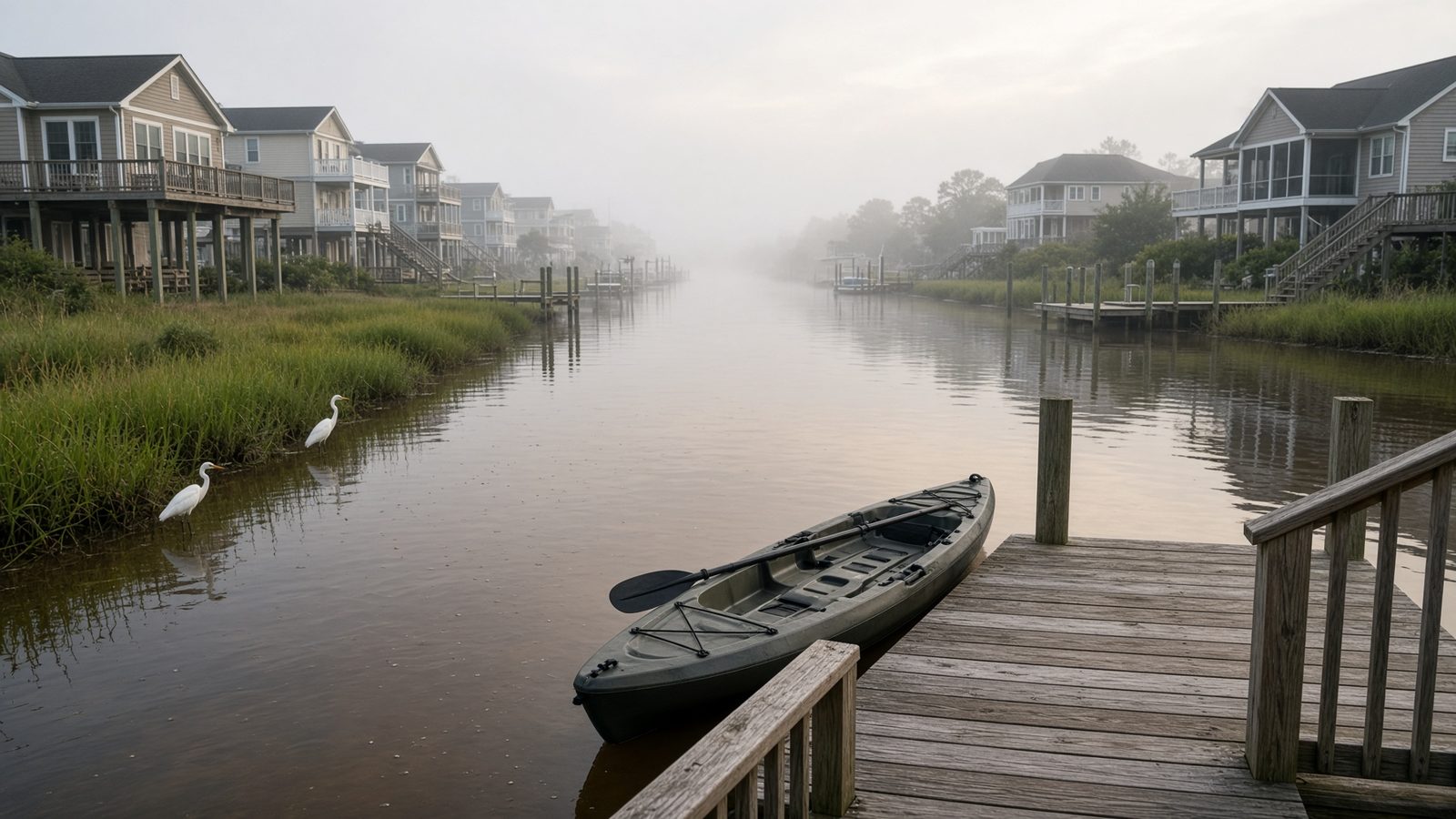
A kayak docked on a quiet soundside canal on Hatteras Island in the early morning

Hatteras Island — the southern end of North Carolina's Outer Banks (OBX) — has two completely different bodies of water, and most kayak advice for the Outer Banks ignores that. The sound side is shallow, protected and forgiving until the wind picks up. The ocean side has shorebreak and rip currents, and launching through it is a skill, not a rental-house afternoon.

So, the short answer: for the Avon canals and protected soundside water, a stable sit-on-top around 10 to 12 feet is the right default. For fishing, go wider, 11 to 13 feet with a raised seat. And weigh the boat before you fall in love with it — the difference between 51 and 107 pounds decides whether you paddle on a whim or only when someone can help you carry it.

Staying with us? You don't need to buy anything. Kayaks are included with the cottage, and the canal is right off the dock. This guide is for people who want their own boat. If you're here for a week, see the kayak fishing guide instead.
How we picked. We haven't paddled every boat here. Specs come from the manufacturers, and every recommendation is backed by independent reviewers — OutdoorGearLab, Paddling Magazine, Kayak Angler, Bassmaster, GearJunkie, Outdoor Life — linked next to each model so you can read the testing yourself. We don't reproduce retailer star ratings. Where sources disagree on a spec, we say so. Models that are discontinued or hard to buy are flagged rather than quietly dropped.

Start here: sound side or ocean side?

The sound. Shallow, warm and protected, with marsh edges and canals you can poke around for hours. The real hazard isn't waves, it's wind and distance: an easy downwind paddle becomes a long grind back, and the NPS warns plainly that distances out here are deceiving. Boat wakes matter too, since the same water gets fished from powerboats.

The ocean. Getting out through the shorebreak, and back in through it, is the whole problem. Add rip currents and a building sea breeze and it stops being a casual paddle. A sit-on-top with drain holes and a high weight rating is not a surf kayak. If the Atlantic is the goal, take a lesson or book a guided trip first — Kitty Hawk Kites has a shop in Avon and runs kayak tours and lessons on the island.

One more thing worth saying plainly: the Avon beach accesses are ocean-beach accesses. They are not kayak launches, and nothing about a parking lot and a dune crossing makes a surf launch sensible.

Either way, check conditions first. Our wind guide covers why mornings are usually calmer, the rip current guide covers the ocean side, and the National Weather Service publishes a daily beach forecast for the Outer Banks with rip current risk.
Recreational sit-on-tops

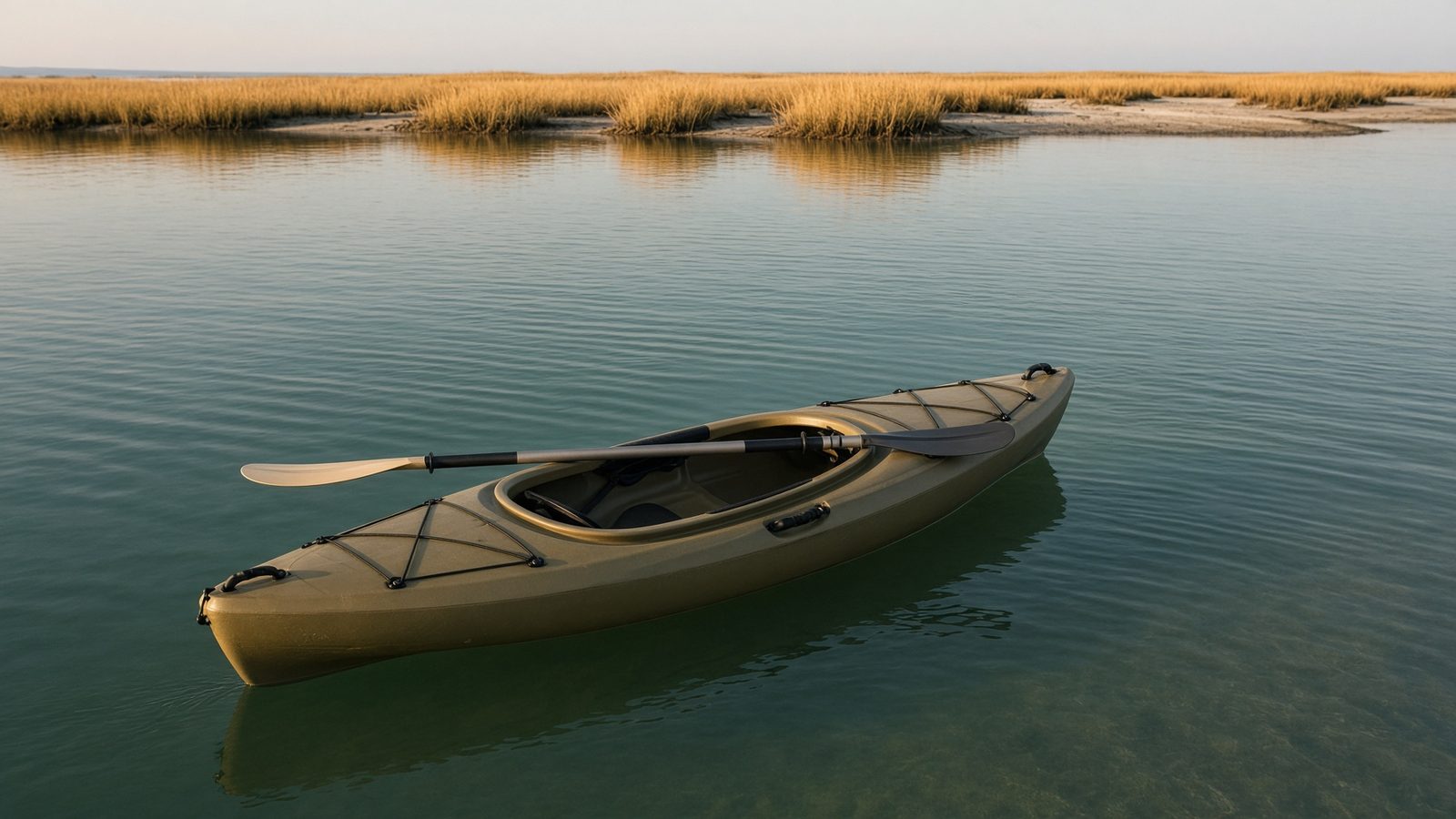
A recreational sit-on-top kayak resting on calm marsh water near Hatteras Island

For canals, protected soundside water and taking a rod along without a full fishing rig.

Affiliate links below — as an Amazon Associate, Lucky Landing earns from qualifying purchases, at no extra cost to you. We haven't tested these boats; the notes come from manufacturer specs and the independent reviews linked with each one.

ModelSizeHull weightCapacityNotes
Wilderness Systems Tarpon 10510'6" × 32"55 lb listed
(57 lb measured)
325 lbOutdoorGearLab's Best Sit-on-Top, scoring 9 out of 10 for stability, though their scales read 57 lb rather than the listed 55. The Phase 3 seat is the reason people pay the premium. Tracking wants the optional rudder, which costs extra.
Perception Pescador Pro 10.010'6" × 32"57 lb325 lbRemovable frame seat that doubles as a beach chair. Reviewers like the stability and easy entry; water pools under the seat and it's heavy for a 10-footer.
Vibe Yellowfin 10010' × 32"51 lb hull
(57 lb rigged)
375 lbBest capacity-to-weight here, and the elevated seat gets good marks. But tracking is the recurring complaint — a real liability on a windy sound crossing.
Ocean Kayak Malibu 11.511'5" × 31"61 lb360 lb total
299 lb usable
The one brand that publishes a usable figure as well as a total — useful honesty. Easy entry and a comfortable seat. But reviewers consistently ding its tracking, and a boat that wanders in a quartering wind is the wrong failure on an open sound.
Perception Pescador 12.012' × 32.5"64 lb375 lbUses the proven old Tarpon 120 hull, so it has genuine secondary stability and handles chop — the best-reviewed trait for open sound water. Cart required.
Lifetime Tamarack Angler 10010' × 31"51 lb275 lbThe budget option, widely available. Reviewers flag rivet holes at the seat as a known leak point — worse in salt — and 275 lb fills up fast with an adult plus gear.
Two numbers the spec sheets hide.

Usable capacity, not total. Max capacity includes the paddler and everything aboard, and a boat loaded to its limit sits low and paddles badly. Old Town is unusual in publishing both: the Malibu 11.5 is rated 360 lb total but 299 lb usable. Most brands publish only the total, so treat roughly two-thirds of it as the comfortable working load.

Is a paddle included? Usually not. The Malibu, both Pescadors and the Tarpon are typically sold hull-only; the Lifetime usually ships with a paddle you will want to replace anyway. Budget $140 or more for a real one — see the paddle section below.

Vibe lists the Yellowfin hull at 51 lb; one independent reviewer measured 57 lb, most likely hull-only versus as-delivered with the seat.

Fishing kayaks

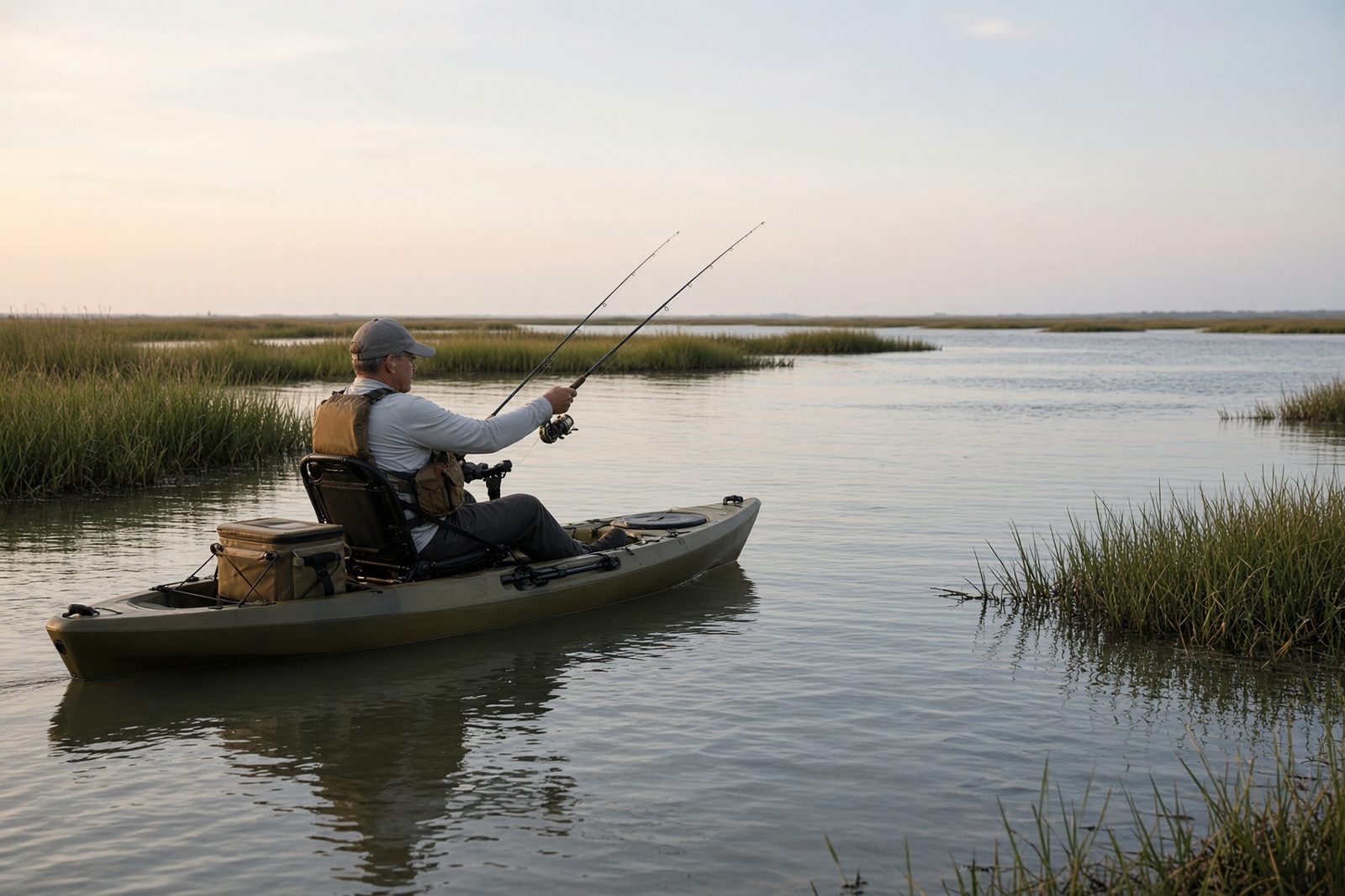
An angler fishing from a kayak in the marsh grass along Pamlico Sound

Wider, more storage, raised seats — and heavier. Weight is the honest dividing line in this category.

ModelSizeWeightCapacityNotes
Perception Pescador Pro 12.012' × 32.5"64 lb375 lbThe all-round pick. Framed stadium seat, good secondary stability, rails already fitted. Kayak Angler says the molded rod holders are too shallow to trust — plan on aftermarket holders.
Vibe Sea Ghost 11011'6" × 33"62 lb hull
(~84 lb rigged)
425 lbIncludes a toe-controlled rudder, which nobody else does at the price and which matters in sound wind. Downsides: the console crowds standing room, and kick the rudder up in skinny water.
Perception Outlaw 11.511'6" × 35"77 lb425 lbThe stand-and-fish option: a 35" beam and a frame seat 16" above a walkable deck. A tri-keel hull tracks well for the width; the seat has no low position and there are no adjustable footrests. At 77 lb it is a cart-and-two-people boat.
Hobie Mirage Passport 12.0 R
pedal · dealer only
12' × 34"83 lb rigged400 lbThe pedal boat to pick for Pamlico: the drive's fins flex and kick up flush with the hull in shallows, which a propeller can't. Reviewers note thin storage and poor paddling when you stop pedalling. Sold through dealers, not Amazon.
Old Town Sportsman PDL 106
pedal
10'6" × 36"107 lb450 lbSuperb standing stability and instant reverse. But it's a propeller drive that needs more water than fins, and at 107 lb GearJunkie called solo transport daunting. Truck or trailer, hard ramps only.
The weight reality check. Over soft sand, past about 55 lb you need a cart with wide wheels. The two 57-pounders (Pescador Pro 10.0 and Tarpon 105) are the sweet spot for shallow-water fishing you can still handle alone. A 107 lb pedal boat is a trailer purchase, not a beach-access purchase.

Inflatable & folding — when the car is the problem

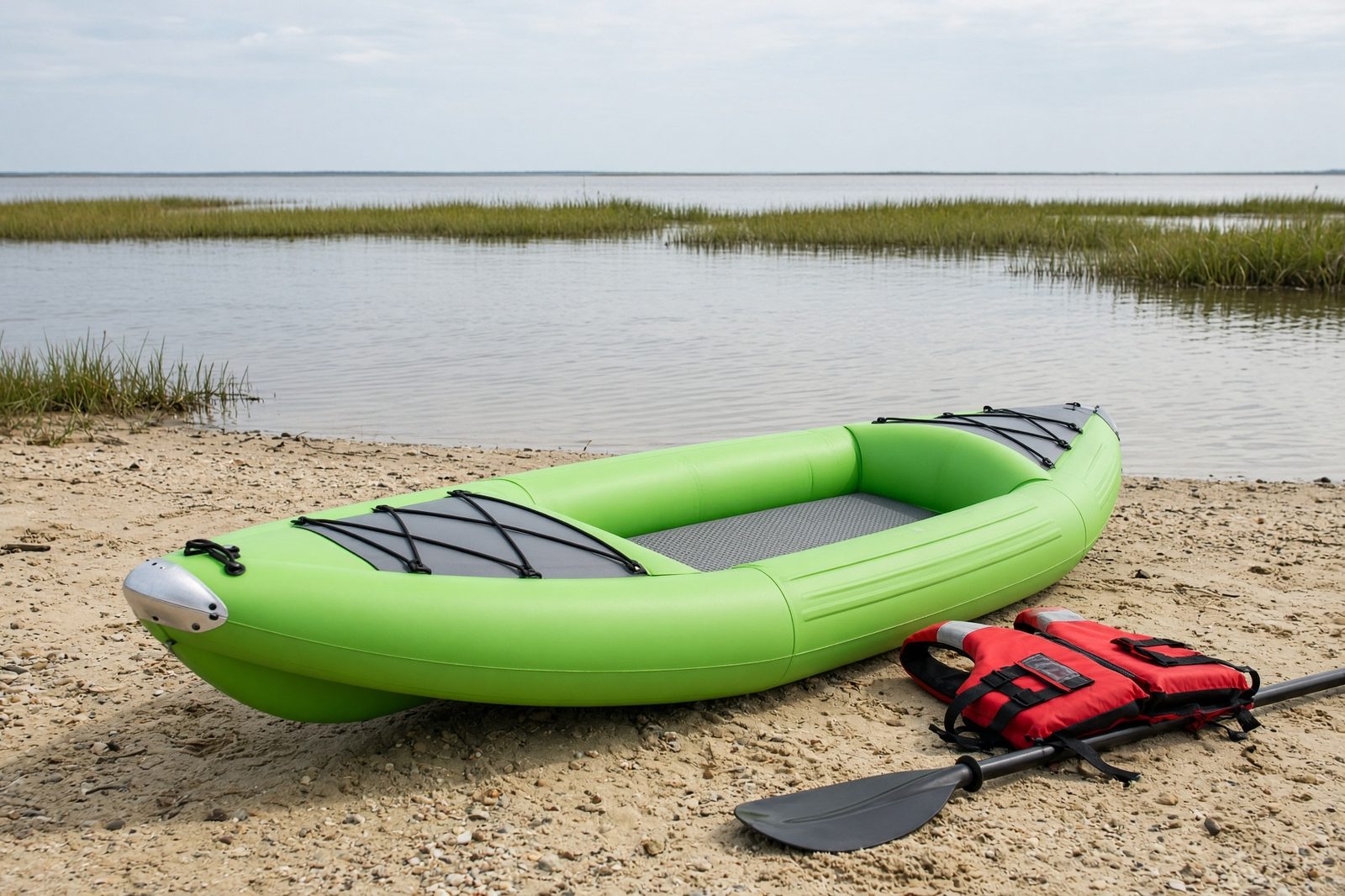
A green inflatable kayak on a soundside beach on Hatteras Island

Rigidity is what separates a boat that tracks from one that wanders. High-pressure drop-stitch floors and internal frames work; cheap I-beam floors are described by reviewers as floppy and drag-inducing. And tall inflated tubes act like a sail, which is why OutdoorGearLab's top two finishers were both folding boats with a low profile.

ModelSizeWeightBuildNotes
Oru Beach LT
folding
12'1" × 29"26 lbFolded polypropyleneOutdoorGearLab's Editors' Choice and the closest thing here to hardshell handling. Low profile catches less wind, and there's no fabric to dry — a real advantage in salt. Open cockpit means protected water only.
Sea Eagle 393rl RazorLite12'9" × 27"35 lbFull drop-stitch, 10 psiNear-hardshell rigidity and the best tracking of the inflatables — reviewers say it handles 10–15 kt. Narrow enough to feel tippy at first, and drying it is a genuine chore.
Advanced Elements AdvancedFrame10'3" × 33"33 lbAluminium ribs + I-beam floorThe value pick. Bow and stern ribs make it track better than a typical inflatable, and owners report scraping oyster beds without damage. Packs to roughly 30 × 17 × 10 in, and note the separate limits: 300 lb of people and gear, 235 lb of paddler. The catch: the fabric shell is nearly impossible to dry fully, so mildew follows careless storage.
Intex Excursion Pro K212'6" × 32"35 lbI-beam floorTreat it as a two-to-four-season consumable. It dries fast, which salt likes, but testers found thin construction, weak fittings and poor solo tracking. Fine for canals, wrong for crossings.

Whatever you buy: fit the skeg, rinse with fresh water, and dry it fully before it goes in the bag. Oru's care guidance is the clearest manufacturer advice on salt of any brand here. On budget inflatables the hardware fails before the hull does — valves, clips and skeg fittings are where salt does its work.

Seats, paddles and the gear that actually changes a day

An aftermarket seat

The cheapest upgrade that changes how long you last. Factory sit-on-top seats are usually a thin pad and a backband. Look for a back tall enough to support you, padding that drains rather than soaks, and straps that fit your hull's existing D-rings. A thicker seat also raises your centre of gravity, which is fine on a wide fishing hull and less fine on a narrow one.

A paddle that fits the boat

This is where most people get it wrong, because fishing kayaks are wide. REI's sizing chart works off your height and the boat's beam: a 32"+ hull generally wants 240–250 cm, where a narrow touring kayak wants 220. Weight is the difference you feel by the end of the day — tested paddles run from about 27 oz to 44 oz, and that spread is thousands of strokes.

A cart that works in soft sand

This is the accessory people buy twice. Narrow hard wheels knife straight into dry sand and plough instead of rolling — reviewers name several popular budget carts as unsuitable for soft sand for exactly that reason. You want wide balloon or compression wheels.

Holding position in shallow water

In the two to four feet you'll fish most of the time, a stakeout pole beats an anchor: instant, silent, and no line to tangle or swamp you. An anchor trolley then lets you shift the hold point fore or aft so you set your angle to the wind instead of sitting broadside to it.

Safety gear, and what the law actually requires

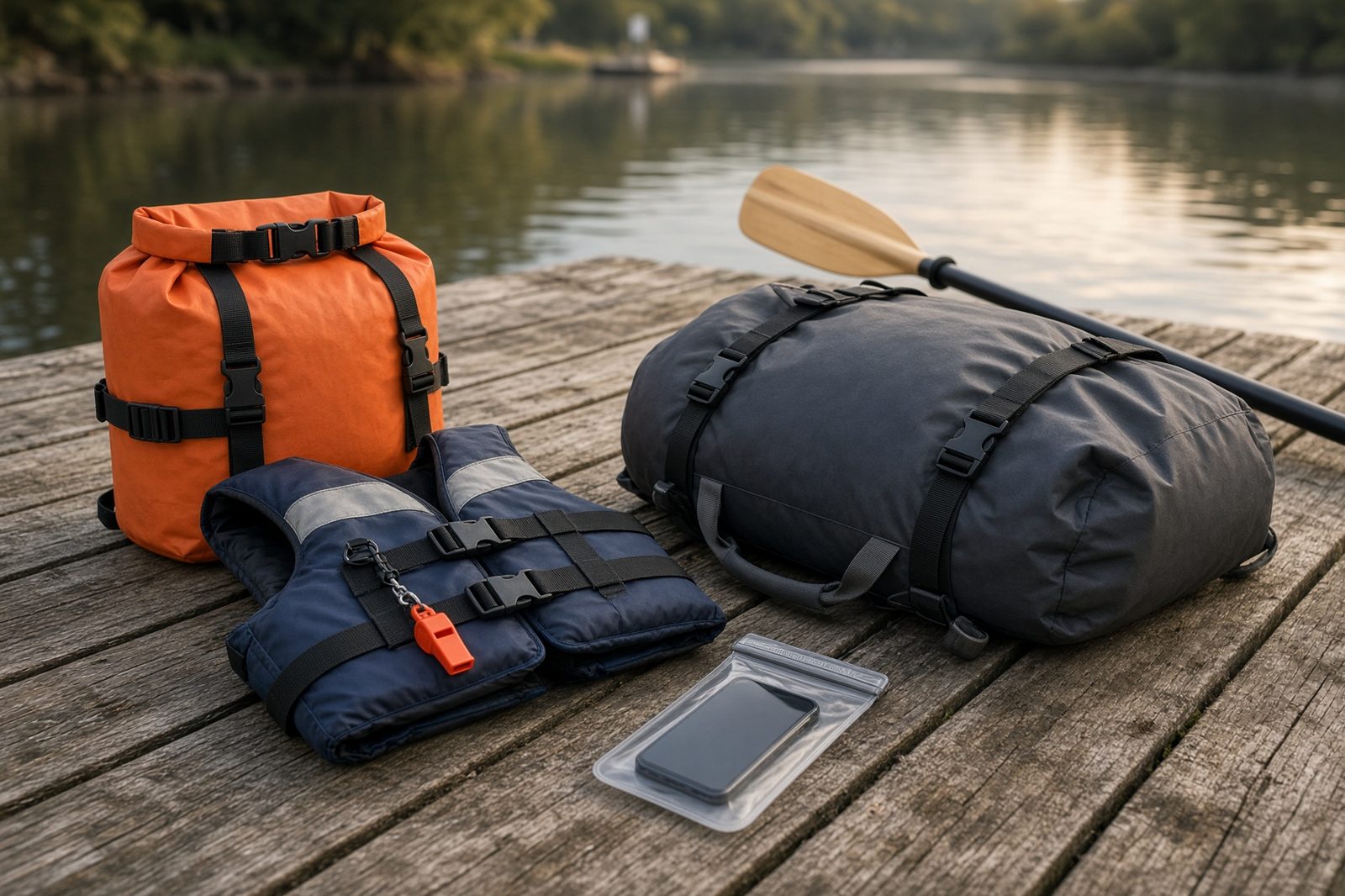
Kayak safety gear laid out on a dock: dry bags, PFDs, a whistle and a waterproof phone pouch

Federal rules for a kayak under 16 ft: one wearable Coast Guard-approved life jacket per person aboard, and a sound-producing device — a whistle or horn — with no decibel minimum. After dark you must show a white light in time to prevent a collision; red and green sidelights aren't required for paddlecraft. In North Carolina, anyone under 13 must wear their life jacket on a vessel that's underway, kayaks included. Adults aren't required by NC law to wear one, though carrying it is the legal minimum, not the safe one.

On top of that, the NPS asks paddlers here to dress for immersion, avoid thunderstorms, plan within their ability, and tell someone their plan before they go.

Fishing extras worth the money

What to be sceptical of

Kayaks FAQ

What size kayak is best for Pamlico Sound?

For most visitors, a stable sit-on-top around 10 to 12 feet. Ten-footers are easier to carry and store; twelve-footers hold their line better when the wind gets up. Anglers usually want 11 to 13 feet and a wider hull for the gear.

How heavy a kayak can one person actually handle?

On pavement, most people manage 55 to 65 pounds with a good carry handle. Over soft sand, anything past about 55 pounds needs a cart with wide balloon wheels. Pedal kayaks run 80 to 107 pounds, which is a two-person lift or a trailer.

Is a sit-on-top or sit-inside better here?

Sit-on-top for warm-weather paddling on the sound. They drain themselves, they're far easier to climb back onto in open water, and they suit fishing. A sit-inside is drier and warmer, which matters more in the off-season.

Are inflatable kayaks good for the Outer Banks?

The good ones are, on protected water. Rigidity is what separates them: a high-pressure drop-stitch floor or an internal frame tracks far better than a cheap I-beam floor. Tall inflated tubes catch wind like a sail, so fit the skeg and go out early.

Do you need a pedal kayak to fish the sound?

No. Pedal drives free your hands and hold position well, but they add cost, weight and draft. Pamlico Sound is shallow, so if you do go pedal, flapping kick-up fins clear the bottom better than a propeller.

Do you need a licence to kayak on Hatteras Island?

No licence or permit to paddle. If you fish from the kayak, anyone 16 or older needs a North Carolina Coastal Recreational Fishing License. Federal rules require a wearable PFD aboard for every paddler and a whistle or horn, and anyone under 13 must wear their life jacket in North Carolina.

Is Pamlico Sound safe for beginners?

It's usually calmer and shallower than the ocean side, but it isn't automatically safe. Wind builds chop and current, thunderstorms form fast, and distances look shorter than they are. Stay near shore, wear the PFD, and turn back before the breeze makes the return leg the hard part.

Can I launch a kayak from Lucky Landing?

Yes. The cottage is canal-front with a private dock and a clear run toward the sound, and guest kayaks are part of the stay. If you bring your own boat you still need a PFD that fits, a look at the wind, and the sense to keep the first outing inside the canals.

Do you need a fishing licence to kayak-fish in Avon?

Yes, a North Carolina Coastal Recreational Fishing License for anyone 16 or older. Local tackle shops sell them, including Frank & Fran's in Avon. Confirm the current rules before you fish.

Do I need to bring a kayak if I'm staying at Lucky Landing?

No. Kayaks are included with the cottage and the canal is right off the dock. This guide is for people who'd rather own one.

Verify it yourself

Specs, prices and availability change. Go to the source before you buy:

Last reviewed September 2026. Specs are the manufacturers' published figures; where an independent reviewer measured something different, we've said so. If you spot something out of date, let us know.

Related guides

Try before you buy — kayaks are included.

The best kayak for Hatteras is rarely the biggest fishing platform or the cheapest bundle. It's the one you can carry, launch, remount and control in the conditions you'll actually choose to paddle in.

Lucky Landing sits on a canal in Avon with a private dock and kayaks for guests. It's a good way to find out what you actually want before you spend the money.

Check available datesView the home & dock