Home / Beach & Water / Rip Current Safety
Know before you go

Rip current safety on Hatteras Island.

Hatteras beaches are beautiful but mostly unguarded, and rip currents are the leading weather-related danger on the Carolina coast. A few minutes of knowledge is the difference between a scare and an emergency — read this before your first swim.

Atlantic surf breaking on the Avon, Hatteras Island beach
The numbers: the United States Lifesaving Association estimates rip currents cause more than 100 drownings nationwide every year, and account for over 80% of surf-beach lifeguard rescues. Along the North and South Carolina coast specifically, the National Weather Service has tracked an average of about 8 rip current deaths a year since 2000 — more than tornadoes, lightning, and tropical storms combined for the region. Nationally, most victims are men between 10 and 29.

Why Hatteras Island beaches are different

Cape Hatteras National Seashore protects nearly the whole length of Hatteras Island as undeveloped federal shoreline — which is exactly what makes it special, and exactly why almost none of it is lifeguarded. Buxton has the island's one seasonal guarded beach near the lighthouse, staffed Memorial Day through Labor Day. Everywhere else — including the beach a short walk from Lucky Landing in Avon — you and your group are your own safety net.

The island's exposed Atlantic-facing beaches, sandbars, and inlet currents also mean rip currents can form on days that look calm and sunny, not just during storms. Structures like the Avon Pier's pilings are especially prone to channeling currents, so give piers and jetties a wide berth when you swim.
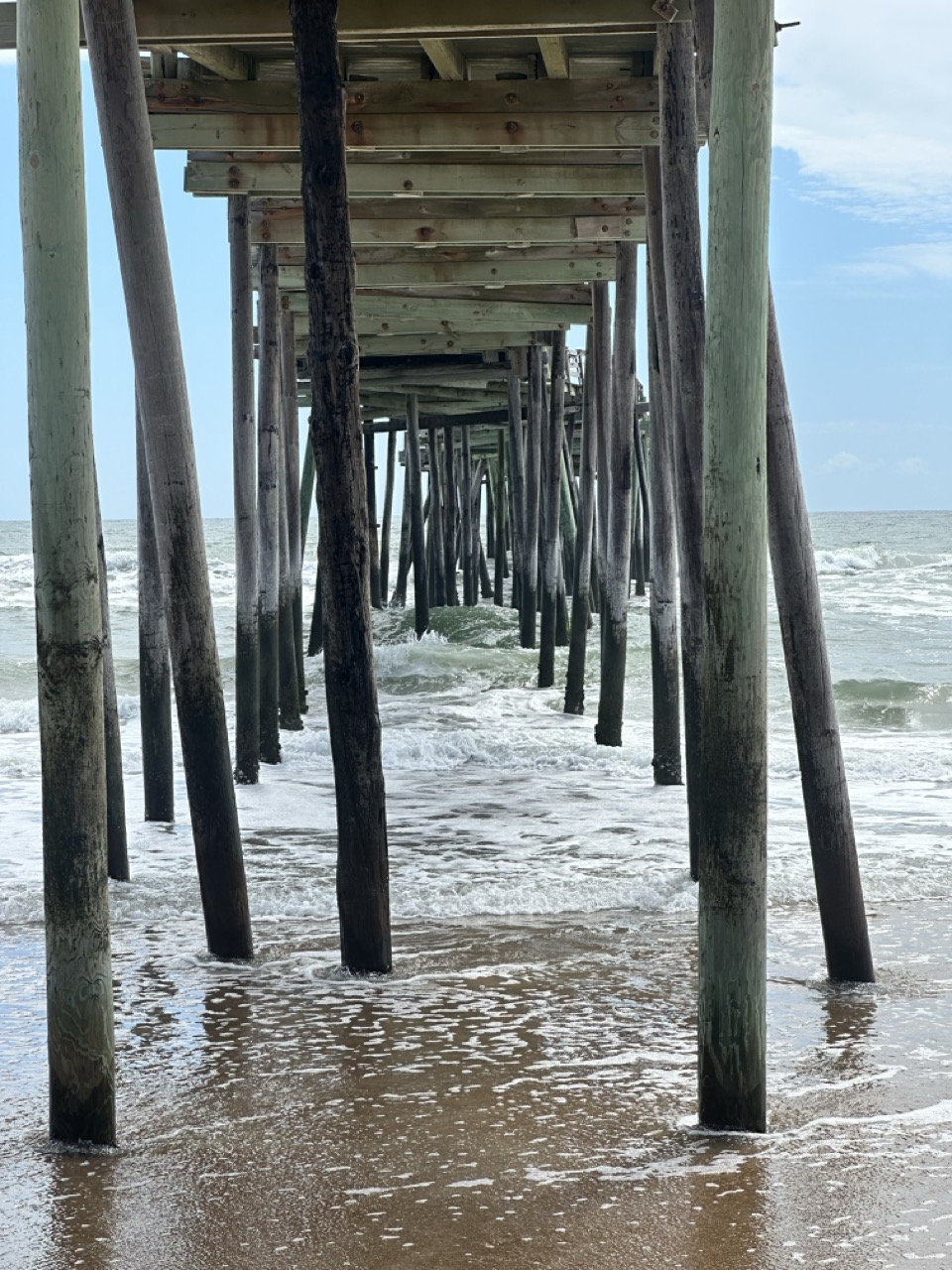
Pilings under the Avon Fishing Pier, where rip currents commonly form

🌊 What a rip current is

A rip current is a narrow, powerful channel of water flowing away from the beach, out to sea — like a treadmill you can't turn off. It won't pull you under; it pulls you out. Measured speeds run 1–2 feet per second and can spike to 8 feet per second — faster than an Olympic swimmer — which is exactly why even strong adult swimmers can't out-swim one head-on.

They form where waves break unevenly, and are most common near piers, jetties, and sandbars — avoid swimming within 100 feet of the Avon Pier's pilings.

👀 How to spot one

Before you get in, look for a channel of churning, choppy water; a line of foam, seaweed, or debris moving steadily out to sea; or a gap of calmer, darker water between lines of breaking waves.

Some, one, or none of these signs may show — so when in doubt, don't go out. Polarized sunglasses help you read the water, and a higher vantage point, like the dune line, makes rips easier to see from shore before you commit.

If you're caught in a rip current

The golden rule: don't panic, and don't fight it. Exhausting yourself swimming against the current is what turns a scare into an emergency.

  1. Stay calm & float

    Don't panic. Keep your head above water, tread water or float, and conserve your energy. The current won't pull you under.

  2. Don't swim against it

    Never try to swim straight back to the beach through the current — even Olympic swimmers can't win that fight.

  3. Swim along the shore

    Swim parallel to the beach to get out of the narrow current, then angle back toward shore once you're free of it.

  4. Can't escape? Signal for help

    Float, stay calm, and draw attention — face the shore, wave your arms, and yell for help.

If someone else is caught: get help and call 911 — don't become a second victim. Most rip current drownings involve would-be rescuers. Throw the person anything that floats (a boogie board, cooler, or life jacket) and yell instructions to float and swim parallel to shore. Never go in after them without a flotation device.

Staying safe as a family

📋

Check the daily forecast

The National Weather Service issues a daily rip-current risk (low / moderate / high) for the Outer Banks. Check it before anyone gets in the water — link below.

🚩

Mind the flags

When posted, red flags mean high hazard / stay out, yellow means caution. On a high-risk day, keep kids in ankle-deep water only.

👨‍👩‍👧‍👦

Never swim alone

Always swim with a buddy and keep young children within arm's reach. Without lifeguards, you are each other's safety net.

Kids on the sand: the same currents that pull swimmers out can undercut sandbars kids are standing on. Keep young children in ankle-deep water on higher-risk days, and make "swim parallel, don't fight it" as familiar a rule as "look both ways" before your trip.

Verify it yourself

The statistics and guidance on this page are drawn from official government and lifesaving-association sources. Conditions change day to day, so always check before you swim:

Last reviewed for the current season. If you spot something out of date, let us know.

The rest of the beach & water guide

Beach driving permits, fishing, best beaches, surfing & kiteboarding, and where to rent gear.

Back to Beach & Water Guide

Book your week and settle into the quiet side of the Outer Banks.

Check Availability

Keep reading