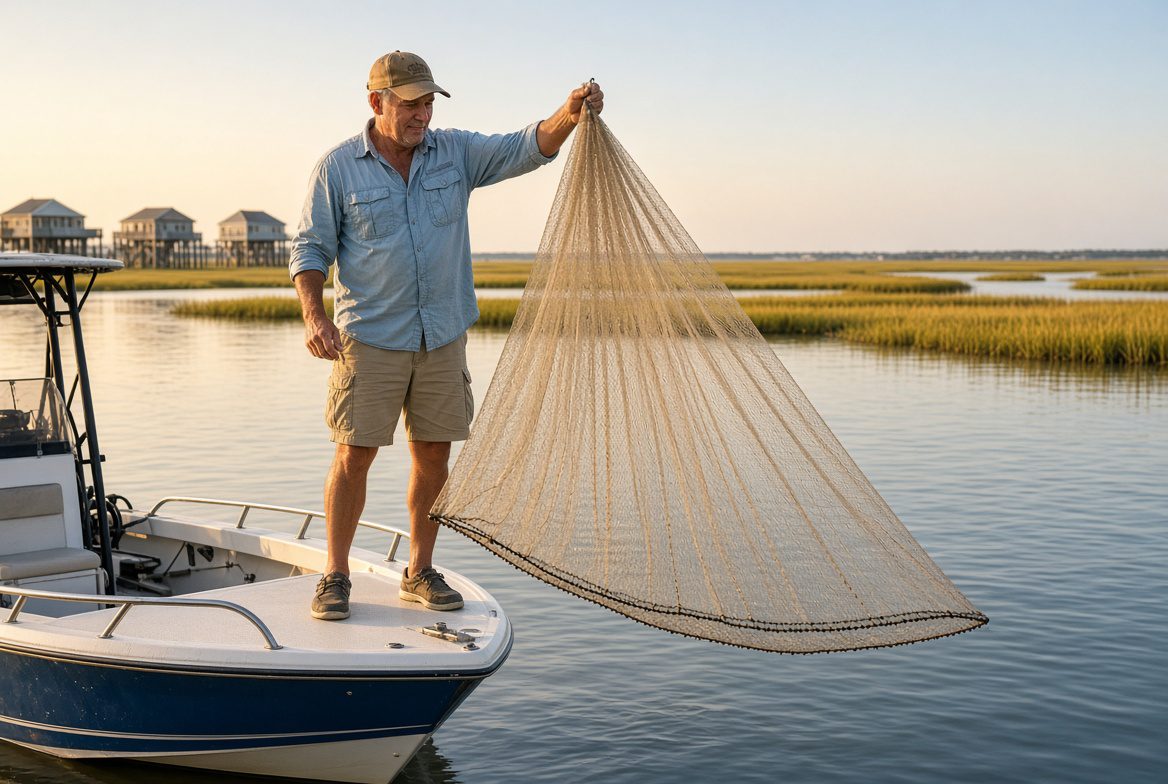
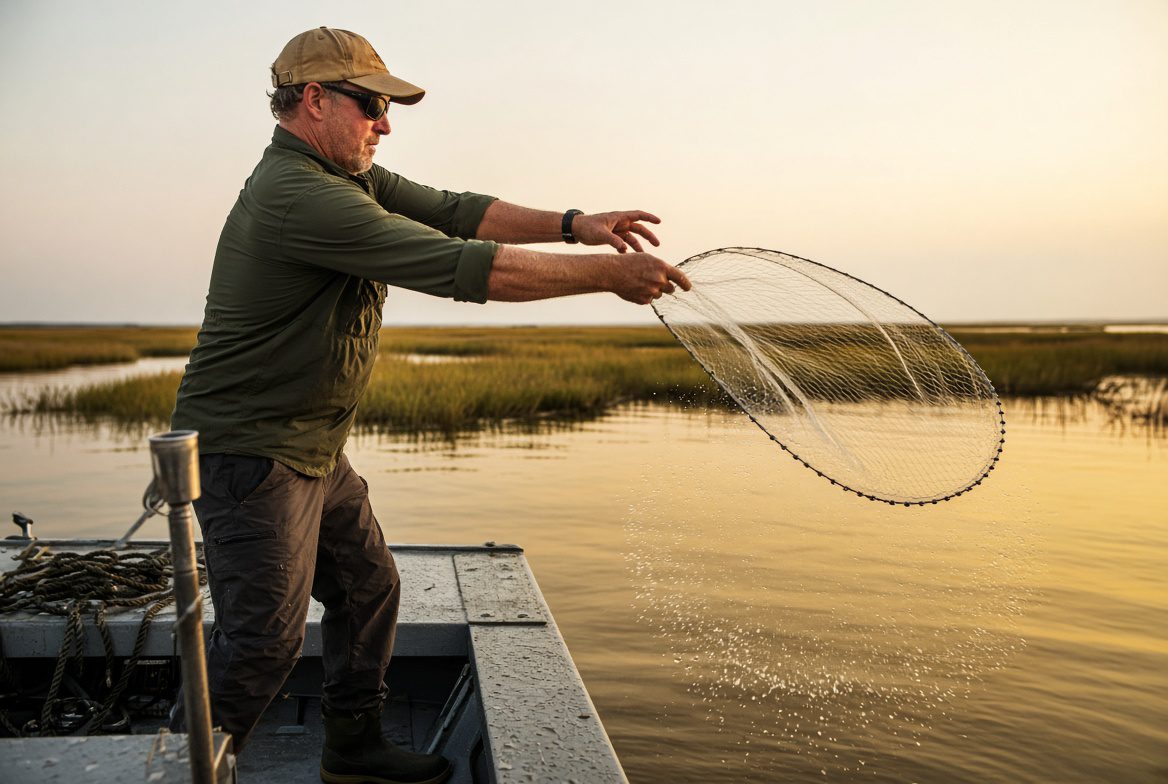
Fresh-caught finger mullet or menhaden outfish store bait every time. The goal is simple: make the net open flat and wide like a pancake when it lands. The first few throws will be messy — that's normal.
Some links on this page are Amazon affiliate links. As an Amazon Associate, Lucky Landing earns from qualifying purchases — at no extra cost to you. We only recommend gear we'd genuinely pack ourselves.
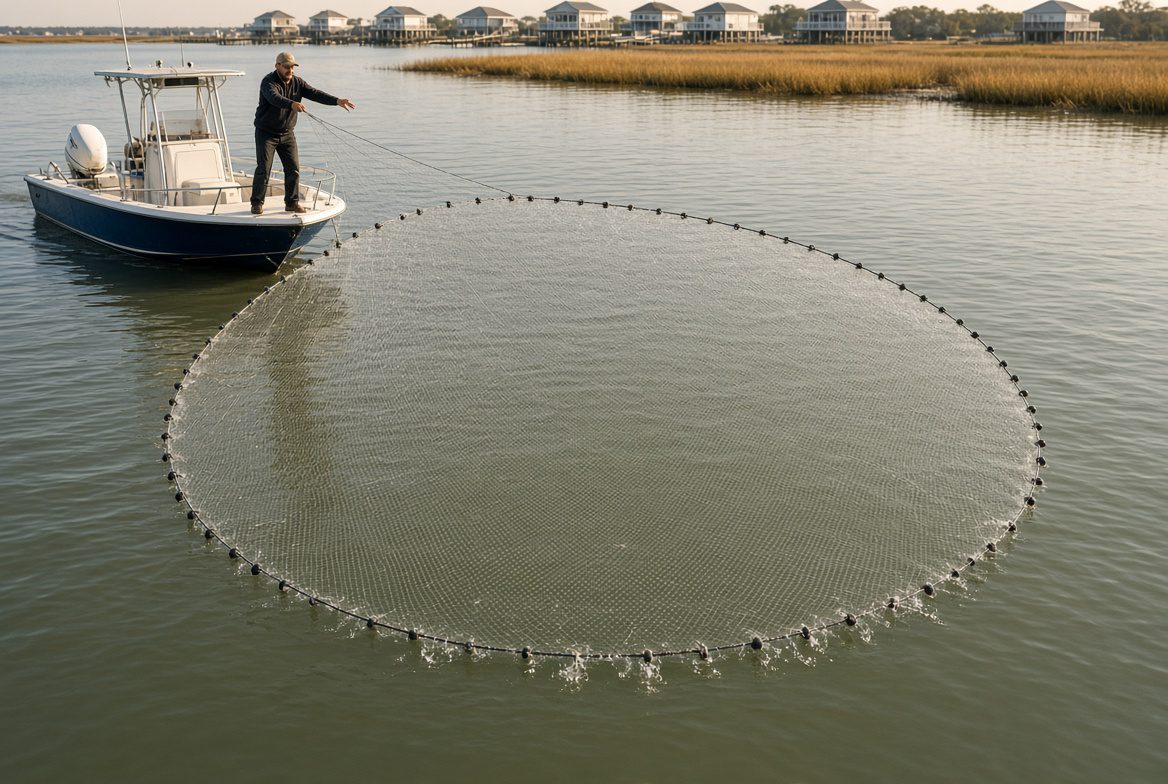
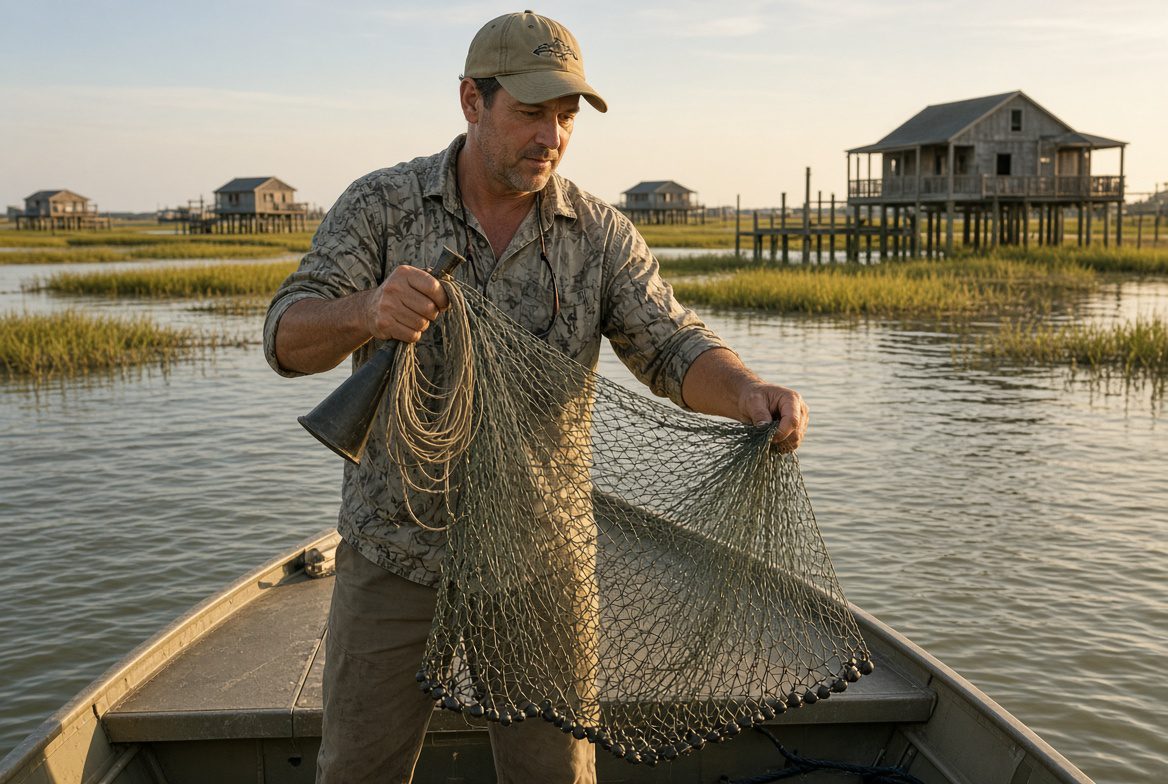
The rope on your wrist that retrieves the net.
The upper center where the lines come together — where you hold it.
The weighted outer edge. It makes the net spread, sink, and close around bait — everything about a good throw comes back to controlling it.
The netting that holds bait once the net closes.
Hold the net by the horn and let it hang. Shake it and inspect the mesh, braille lines, and lead line. One twist or snag keeps the whole net from opening. Do this before every cast, especially after pulling in grass or shell.
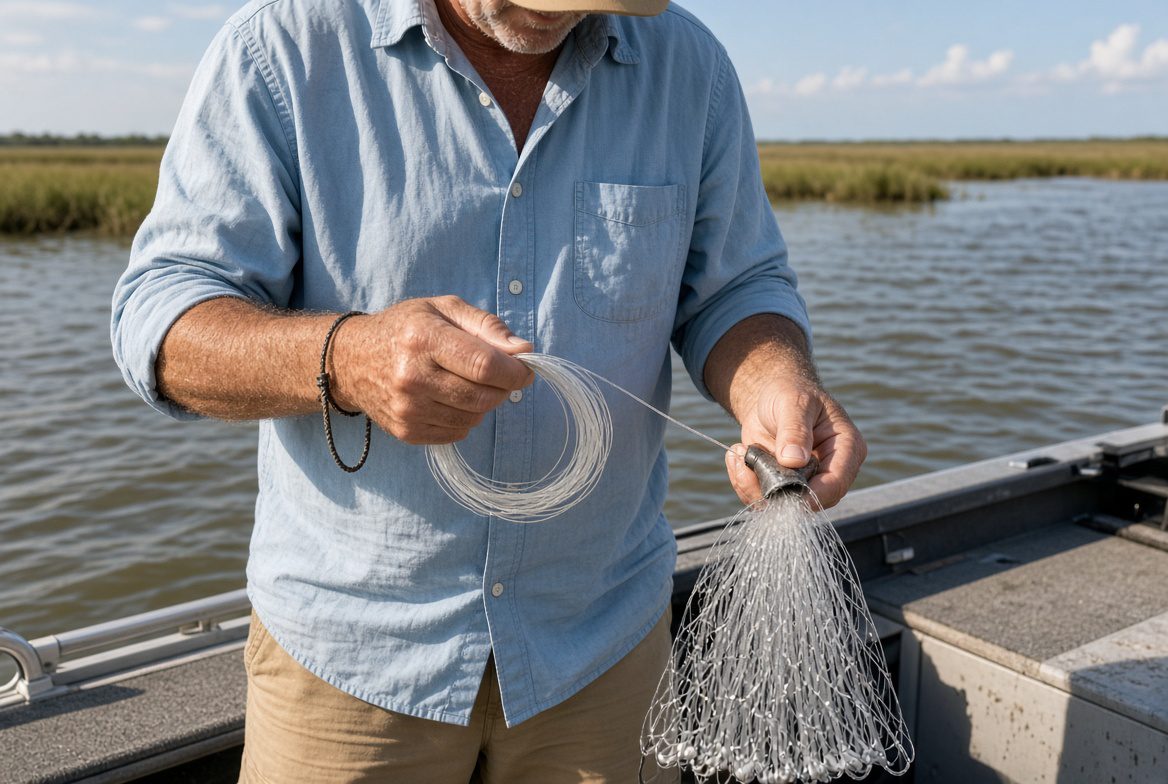
Loop it over your throwing wrist — secure, not tight — and coil the rest in loose loops in that hand so it releases smoothly. Never wrap it tight around fingers: if the net snags something heavy, you need to be able to let go.
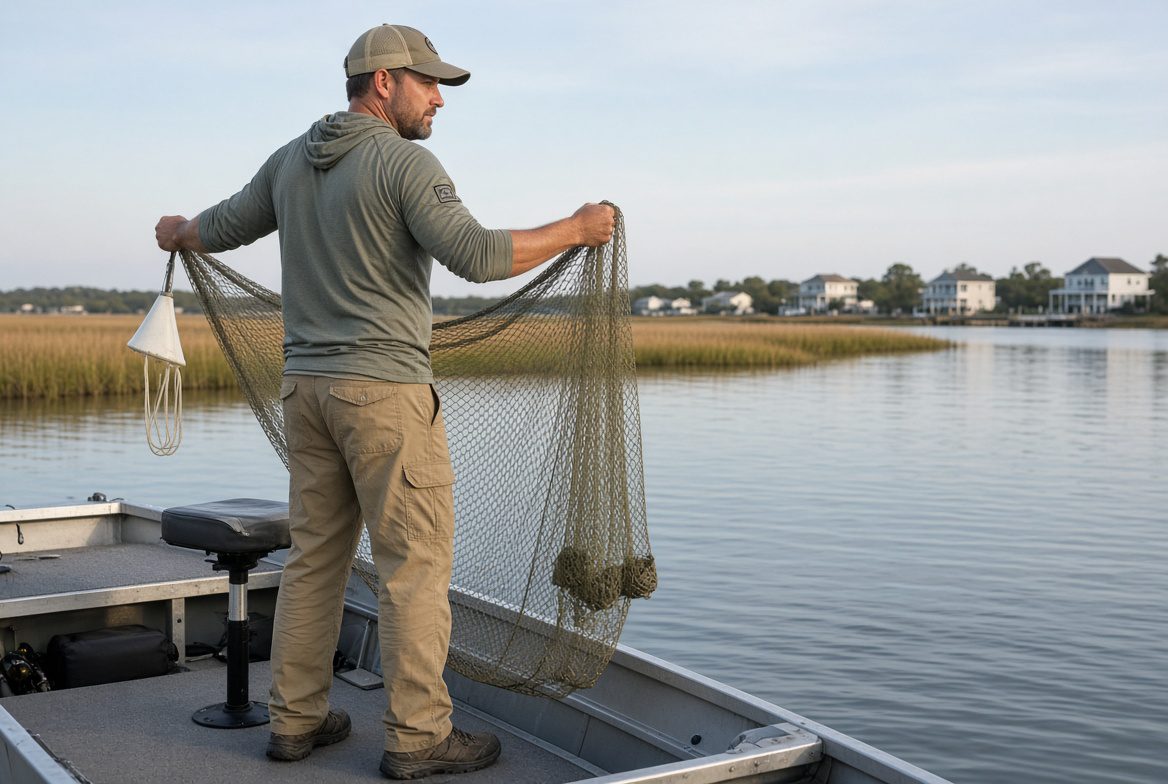
Lift the net so the weighted edge is off the ground and gather a manageable section of mesh. A small beginner net may only need one fold; bigger nets need more controlled loading.
Grab one section of lead line with your free hand and hold another section with your throwing hand. This separation is what lets the net unfurl in a circle instead of dropping in a pile. Keep the weights clear of your feet and gear.
Stand slightly sideways with stable feet and room to rotate your shoulders. Aim beyond the bait, not at the edge of the school — the net needs space to open before it lands.
A smooth sweeping motion, rotating hips and shoulders toward the target. Release upward and outward — not straight down. It should feel like a controlled sweep, not a hard baseball throw. Let the sections go in sequence as you rotate.
Give the lead line time to pull the edge down around the bait — a few seconds in shallow water, longer in deep.
Pull the handline steadily. The lines draw the lead line inward into a pocket that holds the bait. Lift it clear and transfer to the bucket.
Seeing the motion makes it click far faster than reading about it. This beginner-focused tutorial shows a simple load-and-throw method:
Too much net released at once, lead line not separated, or thrown downward instead of outward. Slow down, untangle, and focus on the body rotation.
The net needs momentum and separation between sections. Throwing harder usually makes it collapse earlier. Practice with a smaller net and a smooth sweep.
Loose, even loops release cleanly. Keep the line clear of your feet, cleats, rod holders, and gear.
Avoid oyster beds, pilings, rocks, and heavy grass until you know the area. Lead lines snag on sharp structure fast.
Look for ripples, flashes, feeding birds, or "nervous water" — bait gathers at current seams, creek mouths, canal edges, grass lines, shallow sound flats, and under dock lights after dark. The canal behind the cottage and the sound-side flats at the Salvo Day Use Area are both reasonable places to practice. Finger mullet along the surf edge in late summer and fall are the classic Hatteras target — and exactly what the red drum are eating.
| License | CRFL required, 16+ |
| Mesh / diameter limits | None in NC |
| Where & when | All coastal waters, year-round |
| Gear license | Not needed — cast nets are recreational gear |
| Mullet limit | 100 per person per day |
| Selling your catch | Prohibited |
Regulations change through the state's rulemaking process. These official sources have the latest:
Last reviewed for the current season. If you spot something out of date, let us know.
Book your week — practice throws off the dock come free.
Check Rates & Availability