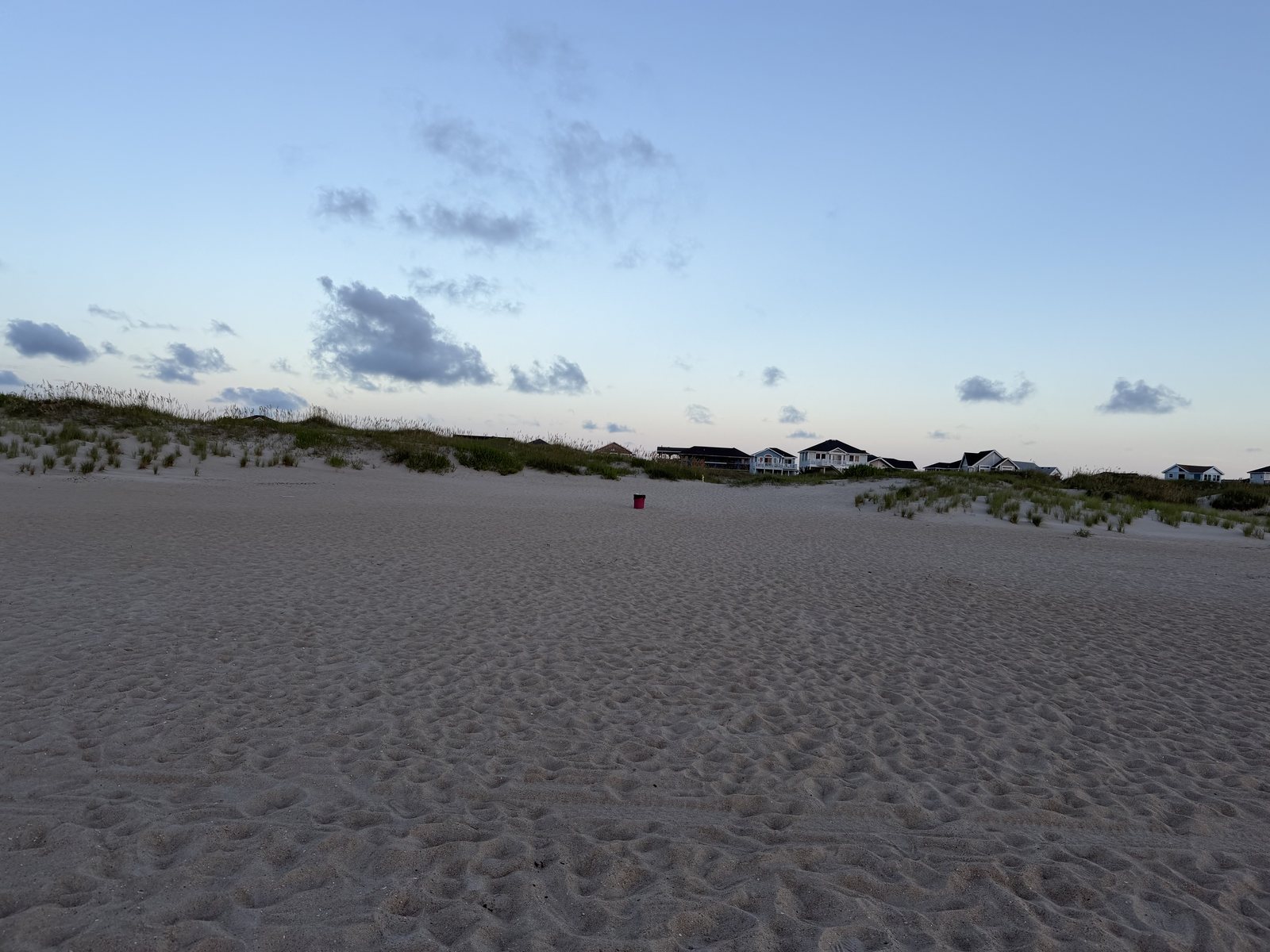
Why Hatteras Island is a shelling hot spot
The stretch of coast from Cape Hatteras to Cape Lookout is North Carolina's shelling epicenter, and it comes down to geography: the warm Gulf Stream runs close enough offshore here to carry tropical species that never reach beaches further north. Ocracoke Island, just across the ferry, has been ranked among the best shelling beaches in the country — but Hatteras Island holds its own, especially right around Cape Point in Buxton, where the cold Labrador Current and warm Gulf Stream converge.
The Scotch bonnet: North Carolina's state shell
Named the official state shell in the mid-1960s, the Scotch bonnet gets its name from a plaid-like pattern of small orange-brown squares on a cream background — said to resemble Scottish tartan. It's a member of the helmet shell family, usually 2 to 4 inches long, and genuinely rare: the North Carolina record measures just 3.5 inches, and longtime local collectors report searching for years before finding a whole one.
Scotch bonnets are warm-water animals that live 50-150 feet down in the Gulf Stream itself — they only reach the beach when a storm pushes them in. That's exactly why the best hunting windows follow a storm with strong easterly winds, and why South Beach at Cape Point — sitting right at the confluence of the two currents — is considered the single best local spot. Even there, most collectors go months between whole finds; a broken piece is far more common than the plaid pattern.
When and where to go
⏰ Best timing
- The hour on either side of low tide
- The morning after a storm with strong easterly winds
- Early light — before other beachcombers get out
- Winter (especially January & February) — fewer people, more storms, better odds
📍 Best beaches
- South Beach, Cape Point (Buxton) — the top local pick, seasonally open
- Buxton to Frisco — lines the inside of the island's "hook," a natural shell collector
- Ocracoke Island — a short ferry ride, nationally ranked for shelling
- Off-season, 4WD beach access lets you cover more ground quickly by truck
What else to look for
Beyond the Scotch bonnet, Hatteras beaches regularly turn up whelks (lightning, channeled, and knobbed varieties — some grow quite large), helmet conchs, olive shells, augers, moon snails ("shark's eye"), and sand dollars. After a good storm, sea glass and the occasional shark tooth show up too.
Affiliate links below — as an Amazon Associate, Lucky Landing earns from qualifying purchases, at no extra cost to you.